A used container shows its condition in six places a buyer can check.
Two checks happen before you see the unit: the container number and the CSC plate. Four happen at the depot or on delivery: the doors, the structure, the floor, and the walls and roof.
Check a used container in six places before you pay: the container number, the CSC plate, the doors, the structure, the floor, and the walls and roof. Verify the number’s check digit and owner prefix, and the plate’s latest examination date, before you see the unit. Walk the box at the depot or on delivery, and compare what you find with the written definition of the grade you are paying for.
The six checks
| Check | What to look for | How to check it |
|---|---|---|
| 1 · Number | Owner prefix, serial number and check digit | The check-digit calculator and BIC prefix lookup |
| 2 · CSC plate | The latest examination date | The plate on the left-hand cargo door |
| 3 · Doors | Both open and close freely, rods lock, gaskets seal | Open, close and lock each door |
| 4 · Structure | Corner castings, rails, end frames, cross-members | Look for fractures and split welds |
| 5 · Floor | Plywood intact, no rot or delamination | Walk the floor for soft spots |
| 6 · Walls and roof | No through-rust, holes or roof dents that hold water | The light test: from inside, with the doors shut, look for daylight |
What can you check before you see the container?
Ask for the container number of each unit quoted and check it before anything else. The number has three parts: a four-letter owner prefix, a six-digit serial number and a check digit. Run it through the check-digit calculator: a wrong check digit means the number was mistyped or does not belong to a real container. The BIC prefix lookup names the owner for frequently seen prefixes, and the BIC registry covers the rest.
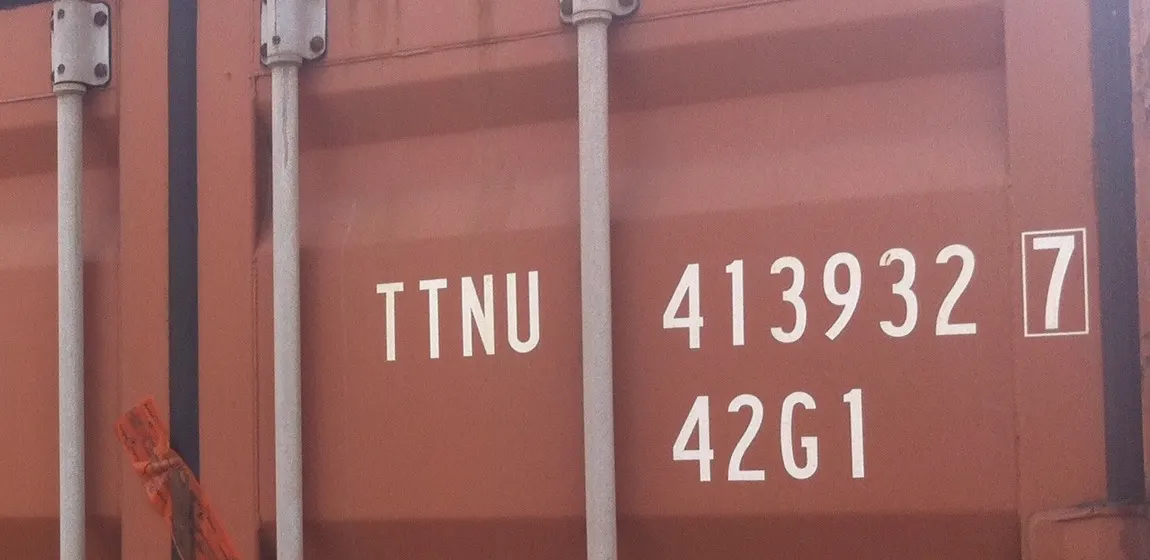
If the containers will carry ocean cargo, ask for the latest examination date on the CSC plate. Storage and domestic transport do not require a current plate; the CSC guide explains how to read one. Last, get the grade you are paying for defined in writing, and compare it with the container condition guide.
What should you look at on site?
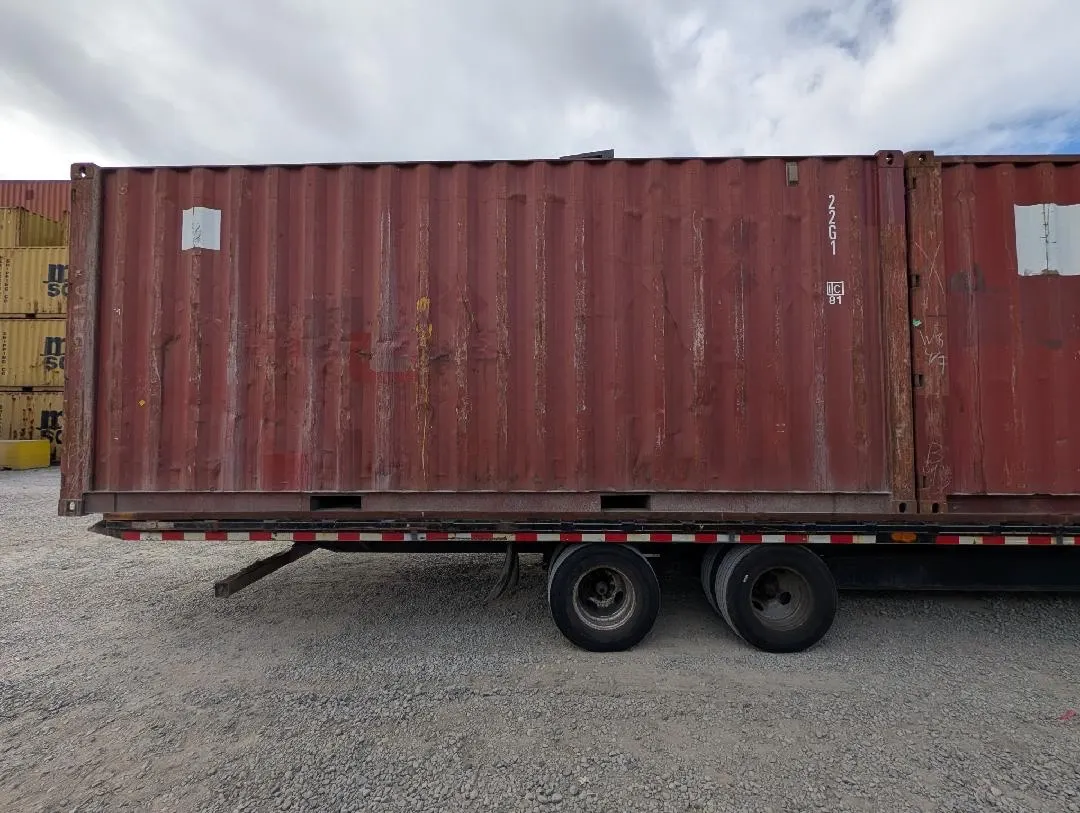
- Doors. Open, close and lock both doors. They should swing freely, the locking rods should engage cleanly, and the gasket should run unbroken around each door. The next section covers the doors in detail.
- Structure. Look at the corner castings, the top and bottom side rails, the end frames and, from underneath, the cross-members. Fractures and split welds are the faults that matter; dents in a panel are a different matter from damage to the frame.
- Floor. Walk the whole floor. The plywood should be intact, with no rot and no delamination where it meets the cross-members.
- Walls and roof. Do the light test: step inside and have a second person close the doors, because a standard container has no door handles on the inside. Look for daylight. Any light through the roof, the walls or the door seals is a hole or a failed gasket. Outside, look for rust that has gone through the steel and for roof dents that will hold water.
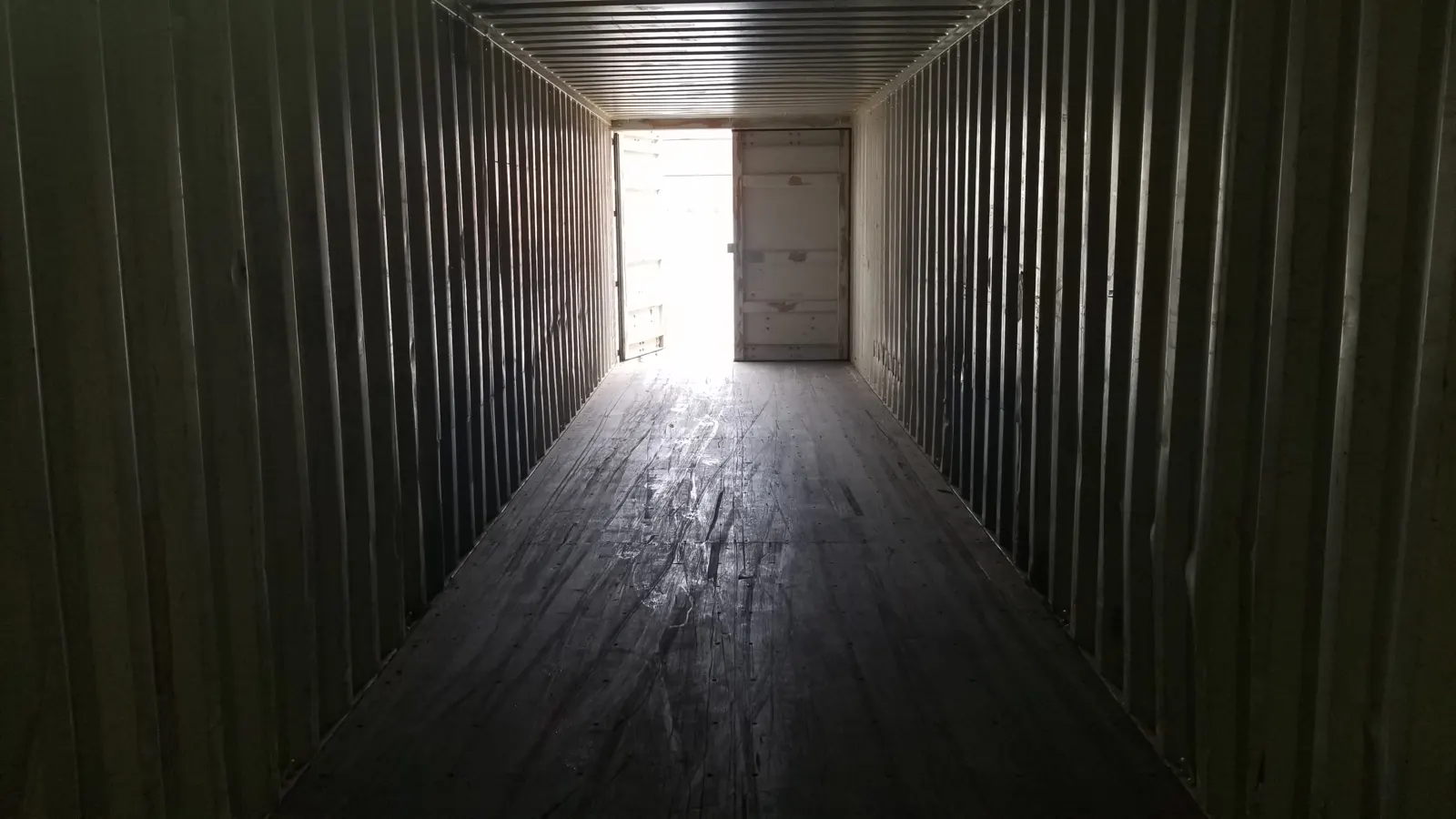
Wear on a used container is normal; what counts is whether it is within the grade you are paying for.
How do you check the doors and door seals?
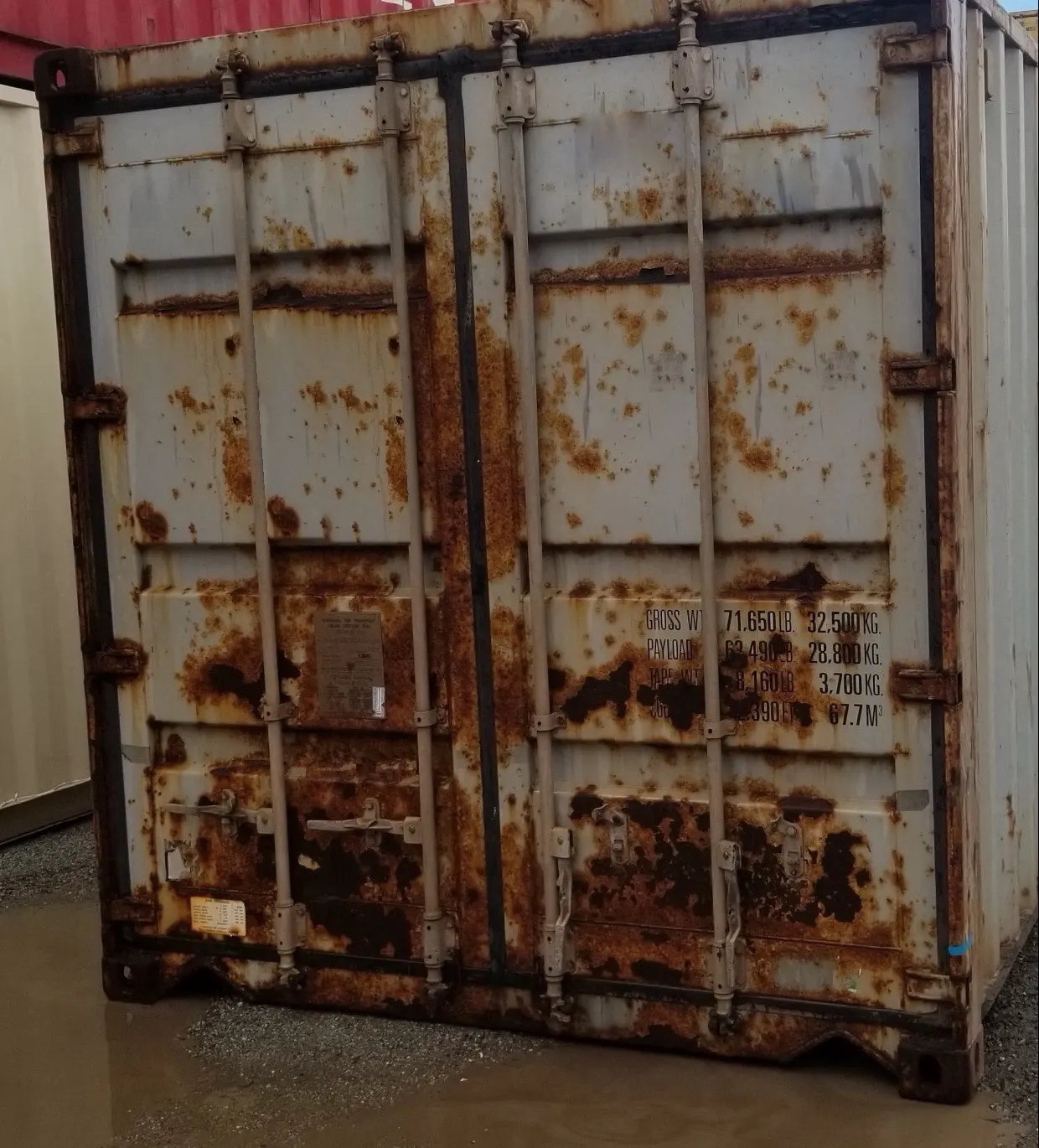
Check the doors with the container standing level. On uneven ground a container twists slightly, and its doors can bind or fail to close square even when nothing is wrong with them. On a standard container each door has two locking rods. A handle turns each rod, and a cam at each end of the rod locks into a keeper on the frame. A rubber gasket around the edge of each door seals it against the frame and the other door.
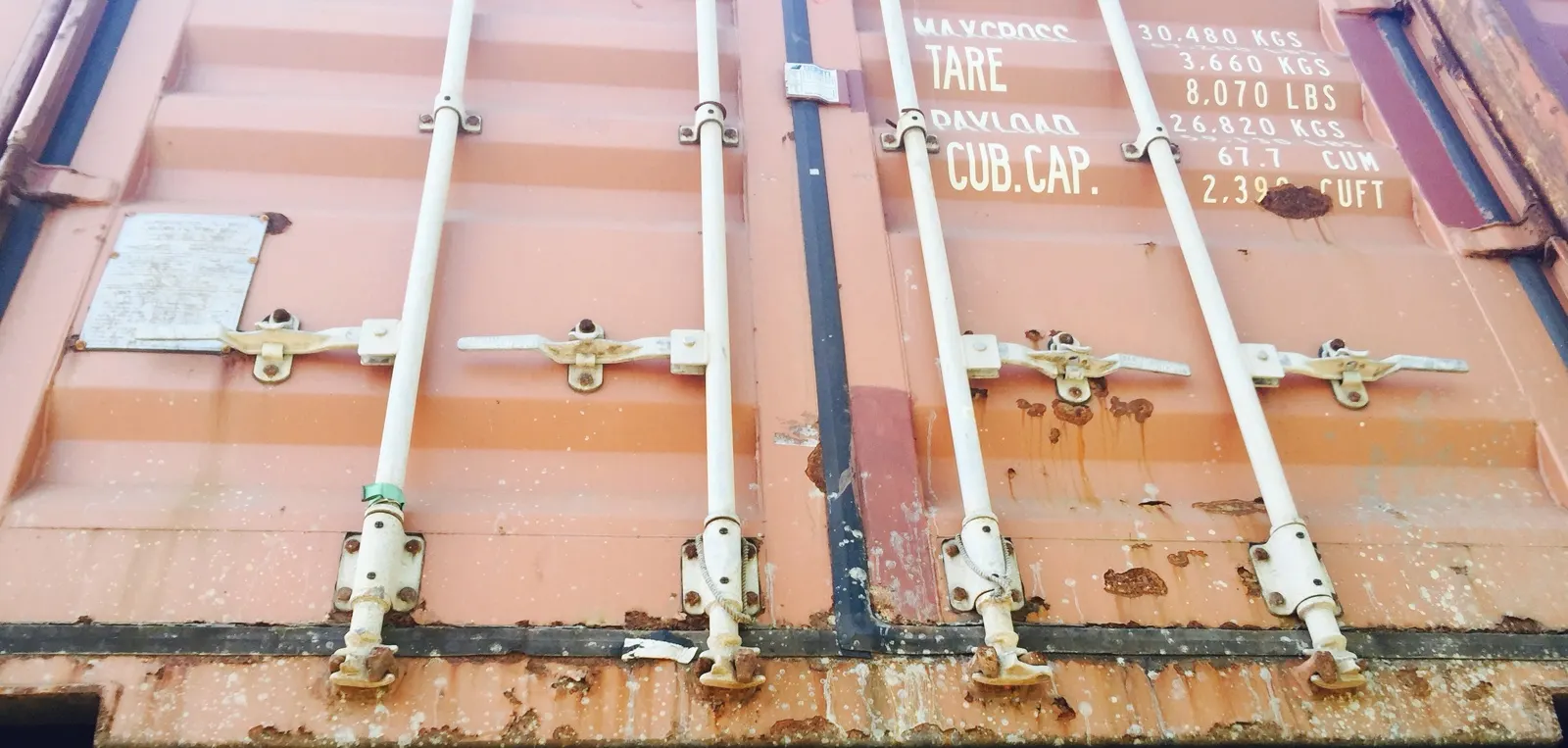
Handles, rods and cams
- Handles. Lift each handle out of its retainer and swing it open. It should move by hand and turn its rod through the full travel. A bent handle, or a retainer that no longer holds its handle, needs repair.
- Rods and cams. Open and close each door, turning its two rods together. As the door closes, the cams should turn into their keepers and pull the door tight against its gasket without being forced. A cam that binds or misses its keeper points to a bent rod or a door out of line.
- Hinges. Check each hinge for cracks, broken welds and pins worked out of line. The door should swing through its full arc without dragging.
- Header and sill. A dent in the header above the doors or the sill below them can stop a door from closing or a cam from reaching its keeper.
- A stiff door. A handle that turns stiffly but fully may need only grease. Do not force a stuck door with a bar or a forklift: it can bend the rods and hinges.
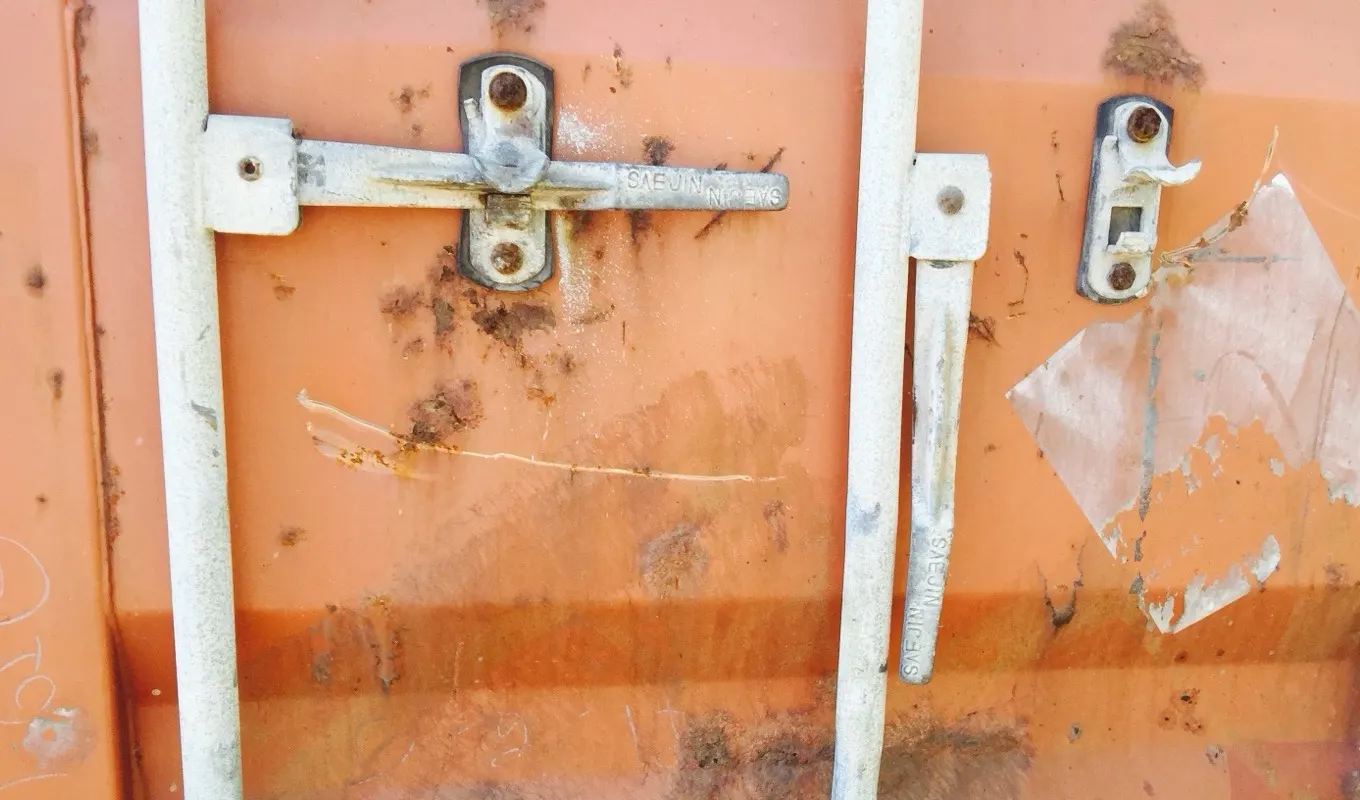
Door seals
- Follow the gasket all the way around. Check both doors along the top, the bottom, the hinge side and the edge where the doors meet. Look for cuts, tears, flattened or missing sections, and sections pulled away from the door.
- Press it. A sound gasket is pliable and springs back. Rubber that has hardened and cracked does not seal reliably.
- Close and look. With the doors shut and locked, the gasket should meet the frame all the way around. In the light test, daylight along a door edge means the gasket is damaged or the door is out of line.
Worn gaskets are normal on a used container. What counts is that the doors close square and lock by hand, and that the seals keep out light. Agree in writing whether any door fault will be repaired before release.
What should you check on delivery?
Match the container number on the unit to the number on your release or invoice before the driver leaves, and make sure the markings are legible. Walk around the container and note any damage on the delivery paperwork before you sign it.
How One Way Lease checks a container before release
Every used unit is inspected against the contracted grade at the depot before release. The working checklist, set out on the sales page, covers:
- the container number, checked against the BIC registry;
- the CSC plate, with an expired plate flagged on the release;
- the ISO 6346 markings, doors, structure, floor, walls and roof;
- prior fleet markings, which are noted, with grinding and repainting quoted separately when specified.
Inspecting a used container FAQ
What does a light test show on a used container?
Step inside and have a second person close the doors, because a standard container has no door handles on the inside. Then look for daylight. Light through the roof, the walls or the door seals means a hole or a failed gasket, and either one will let water in.
What if a container door is hard to open or close?
First check that the container is standing level: on uneven ground a container twists slightly and its doors bind. A handle that turns stiffly but fully may need only grease. A bent locking rod, a cam that misses its keeper or a door that will not close square needs repair. Do not force a stuck door with a bar or a forklift; it can bend the rods and hinges.
Are worn door gaskets a problem on a used container?
Worn gaskets are normal on a used container. What matters is that each gasket is complete and pliable and still seals: no cuts, tears, flattened or missing sections, and no daylight along the door edges when the doors are shut.
Is rust a problem on a used container?
Surface rust is common on used containers and is cosmetic. Rust that has eaten through the steel is not: it lets water in and fails the walls-and-roof check. Rust at the corner castings or along the bottom rails deserves a closer look, because those parts carry the load.
What if a container number fails the check digit?
Ask the supplier to confirm the number from the unit itself. A number that fails the check digit was either mistyped or does not belong to a real container, so it should not appear on a quote or a release.
Should a new (one-trip) container be inspected too?
Briefly, yes. Check the number, open and close the doors, walk the floor and confirm the color matches the order. A one-trip unit has made a single voyage, so it should pass every check in this guide.
Last updated