Containers on the ground today, new and used.
Two ways to buy, split by condition. Across 16 U.S. depots, quoted in one business day and released once paid. Wholesale since 1994.
Checking live stock…
Checking live stock…
Not sure which? Tell us the spec and we’ll point you at the right one — or go straight to the live inventory matrix.
Buy from stock that’s on the ground.
Container sales here start from live depot stock — real units on the ground by type and grade, not a promise to source one later. Pick the spec, lock the price, and pull it yourself or have it delivered. Fourteen container types across the U.S. depot network, including units from our own BIC-registered fleet.
Find it in live inventory.
Browse real depot stock by city, type, grade, and RAL color — what shows in the console is what’s on the ground. New (one-trip) and graded used, across 14 container types.
Lock the spec and the price.
Pick the units, confirm grade and color, and we quote firm against that stock — New (one-trip), IICL, CW, or WWT. Priced to the box you chose, not a category average.
Gate out, or we deliver.
Title transfers on payment. Pull it from the depot on your own truck, or we arrange delivery to your yard.
New (one-trip) — factory-fresh, off the ground.
Units that have made a single loaded voyage: clean steel, uniform paint, and the full CSC life still ahead of them. Listed by city, type, and color across 16 U.S. depots. Quote within one business day, release once paid, on a trucker the next.
What we stock
- 10ʹ utility units
- 20ʹ GP and HC
- 40ʹ GP and HC
- 45ʹ HC
- 53ʹ HC (domestic intermodal)
- GP — general purpose dry-van
- HC — high cube (9ʹ6″ external)
- DD — double door
- OS — open side
- OT — open top (hard or soft)
- FR — flat rack · reefer · specialty
- NEW — one-trip from the factory
- 3-TRP — three-trip, near-new
- IICL — survey-grade
- CW — cargo worthy (international)
- WWT — wind & watertight
- AS-IS — sold as-found
- Stock beige (RAL 1015) — most one-trip
- Pulled-paint used — varies by prior fleet
- Factory paint — any RAL on production runs
- Pulled units may retain factory stencils
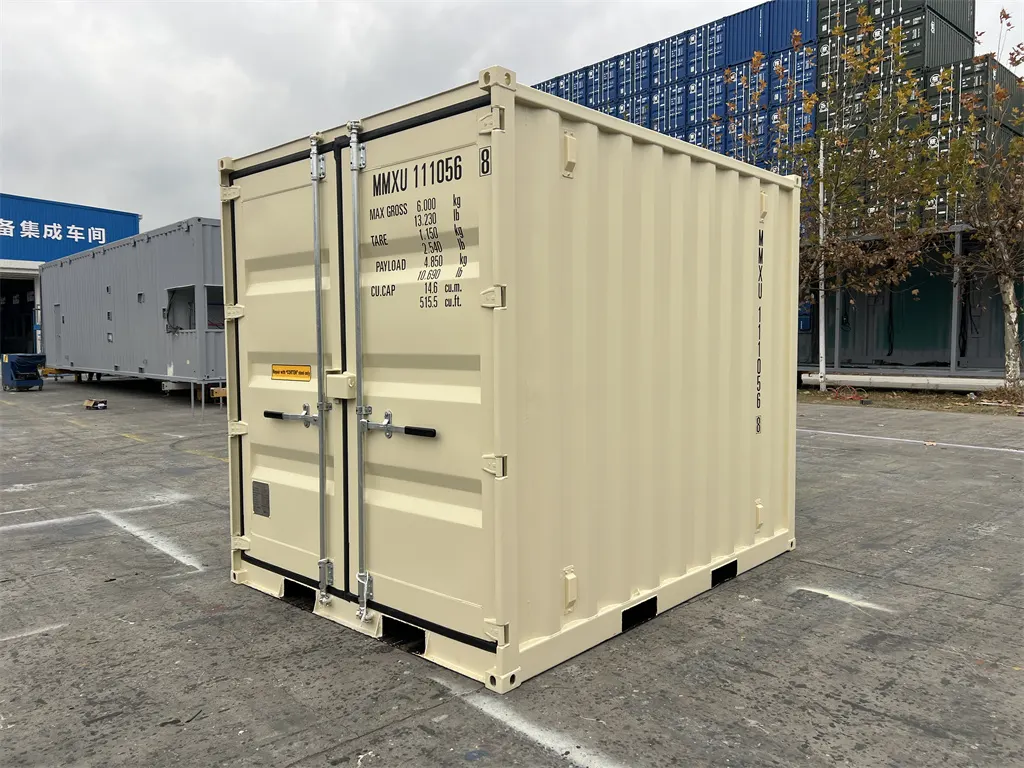
 standard
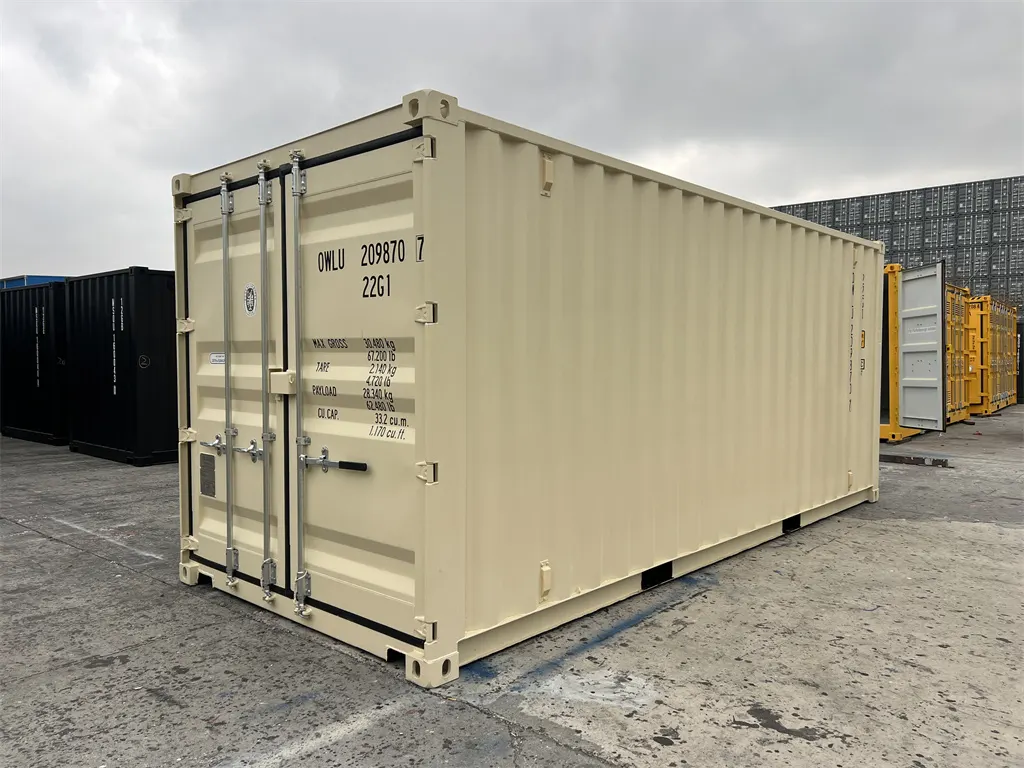
 20ʹ GP
The wholesale workhorse — ISO type 22G1, the most common shipping container in the world.
See type →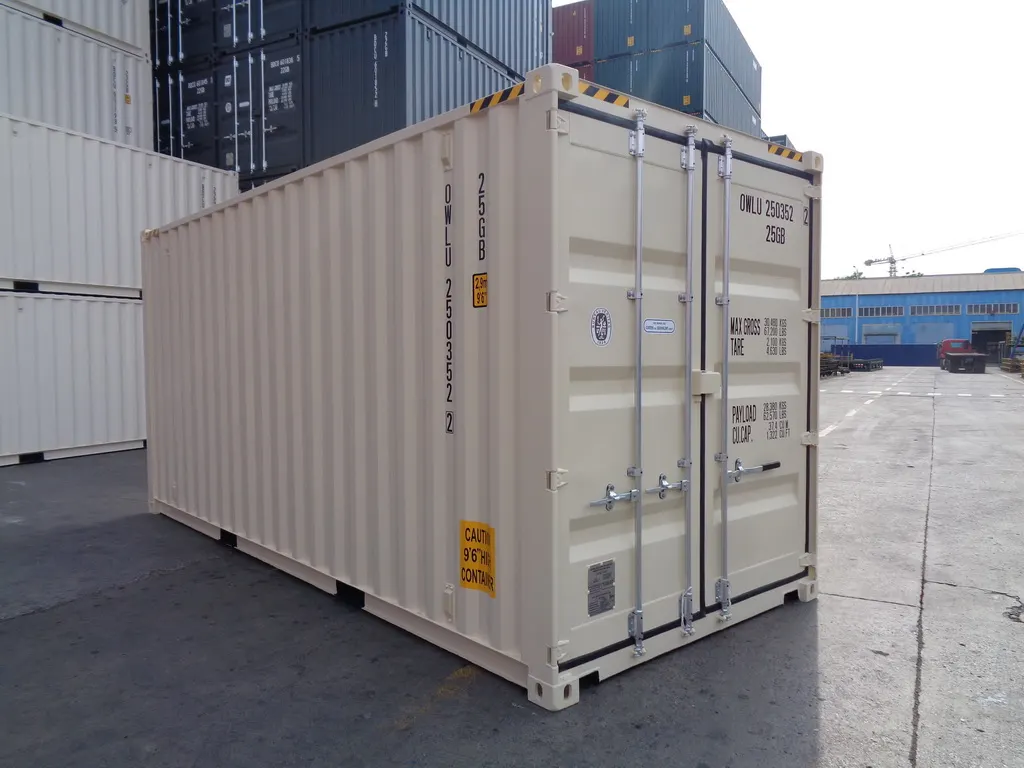 standard
 20ʹ HC
Same 20-foot footprint as the GP, one foot taller. Useful when modifications or cargo need the headroom.
See type →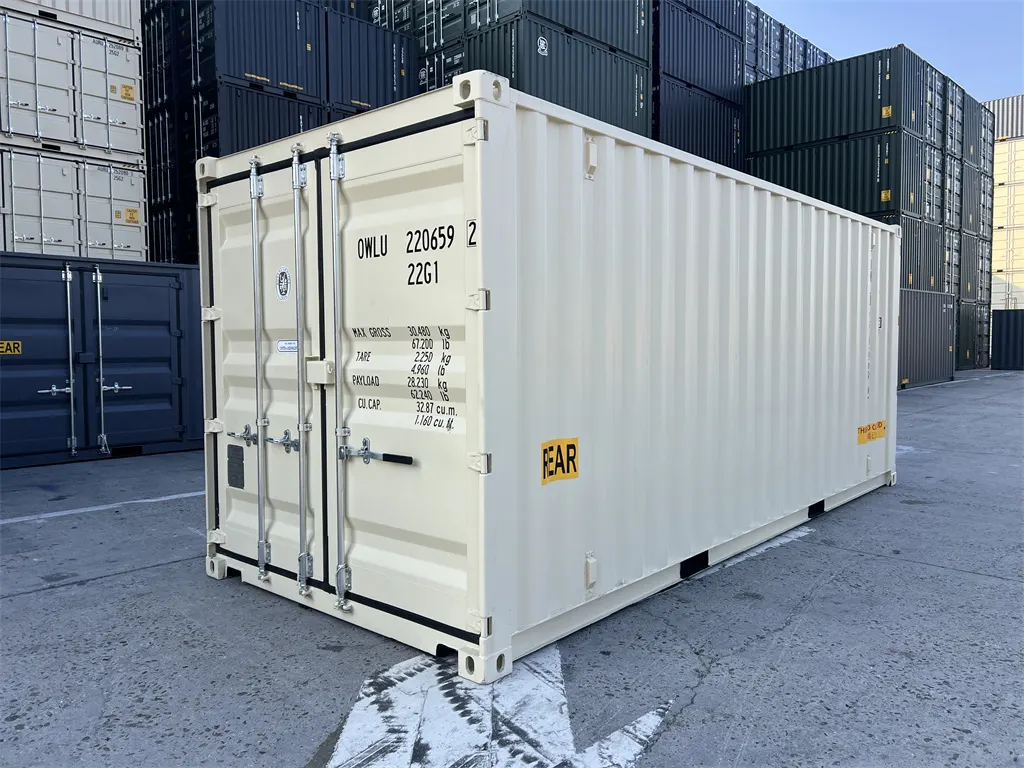 specialty
 20ʹ DD
Cargo doors at both ends — ISO type 22G3. Drive-through 20-foot for pass-through storage and long cargo.
See type →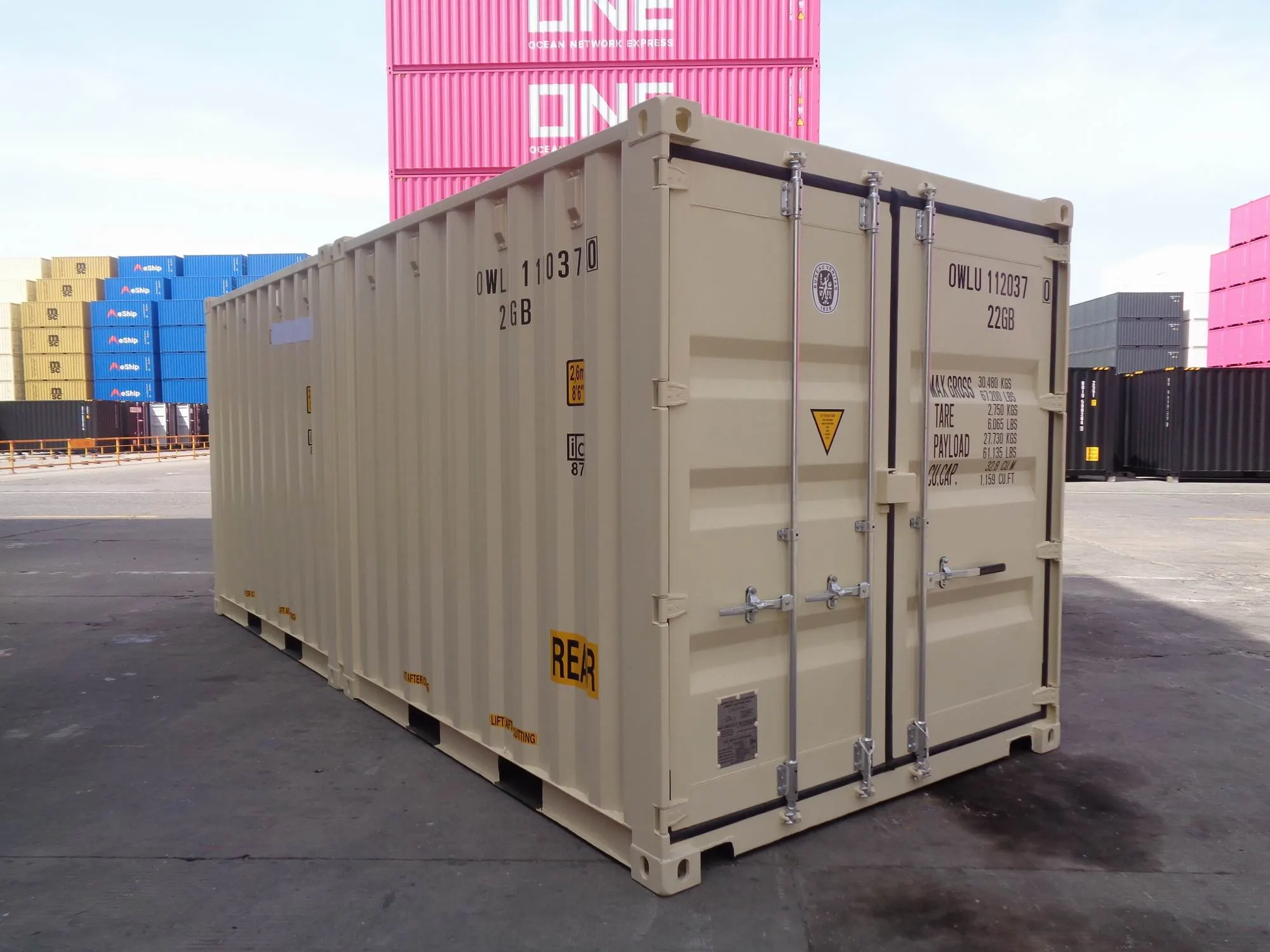 specialty
 20ʹ Duo-Con
Two independently lockable compartments in one 20-foot shell. Two storage rooms in the footprint of one.
See type →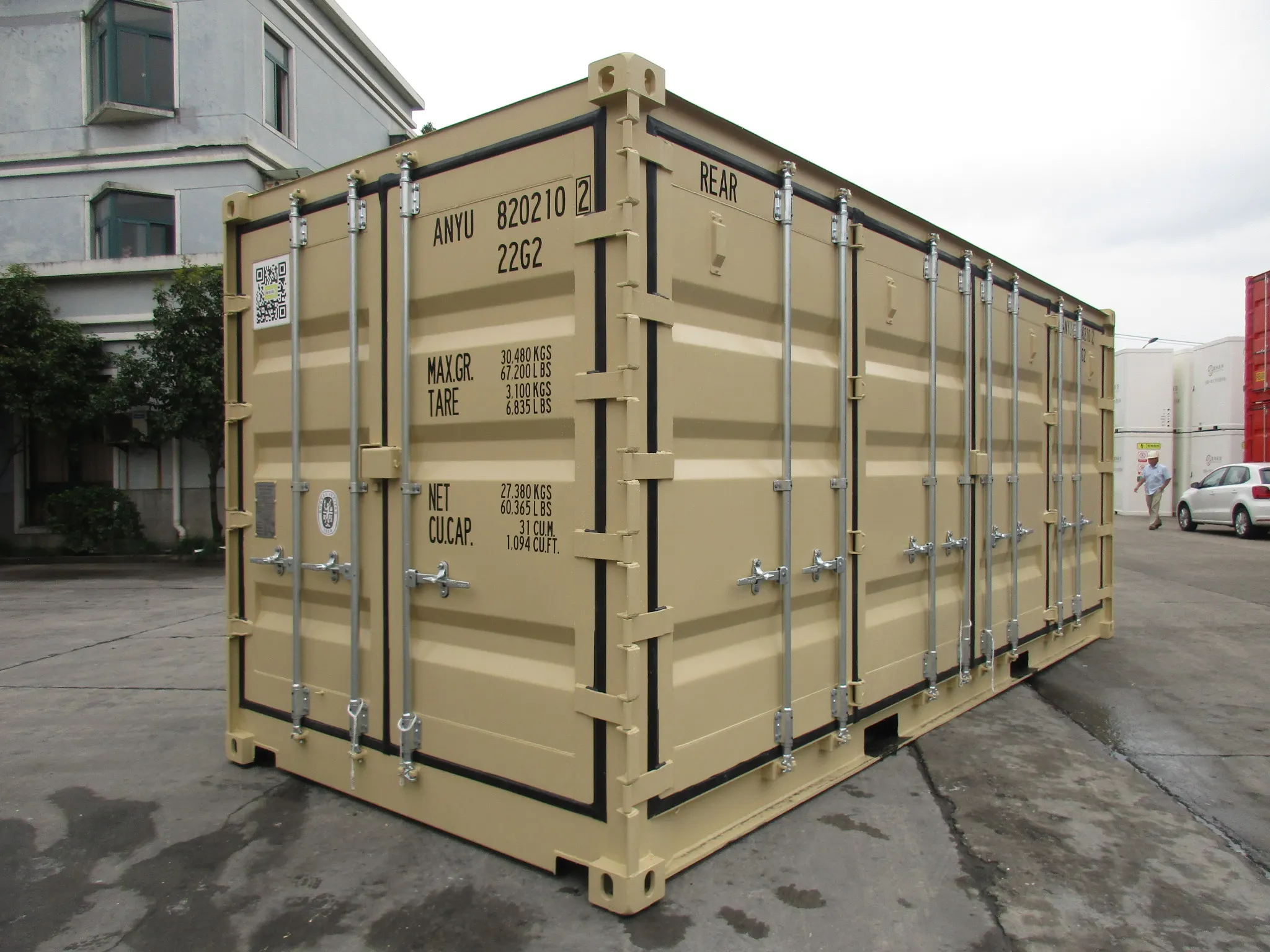 specialty
 20ʹ OS
Full-length side wall replaced by cargo doors. Forklift-loadable across the full 20-foot length.
See type →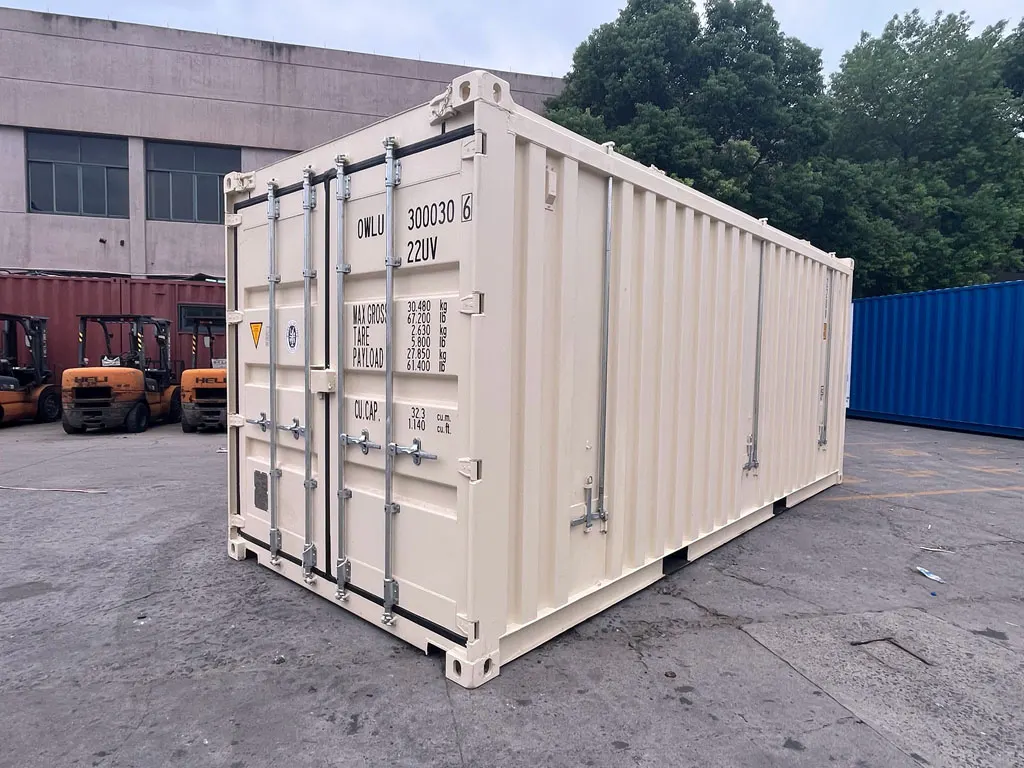 specialty
 20ʹ HT/OT
Removable rigid roof for crane top-loading and overheight cargo. ISO type 22U6 — hard-top, not tarpaulin.
See type →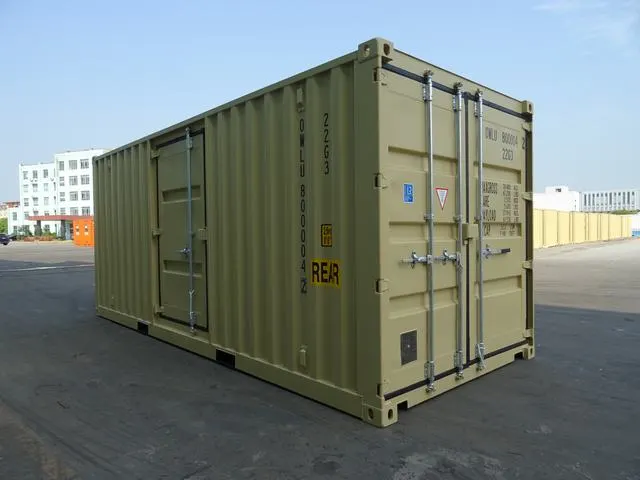 modified
 20ʹ GP + 4ʹ side door
Personnel-width side access on a standard 20-foot GP. Factory-cut, reinforced cutout, full gasket.
See type →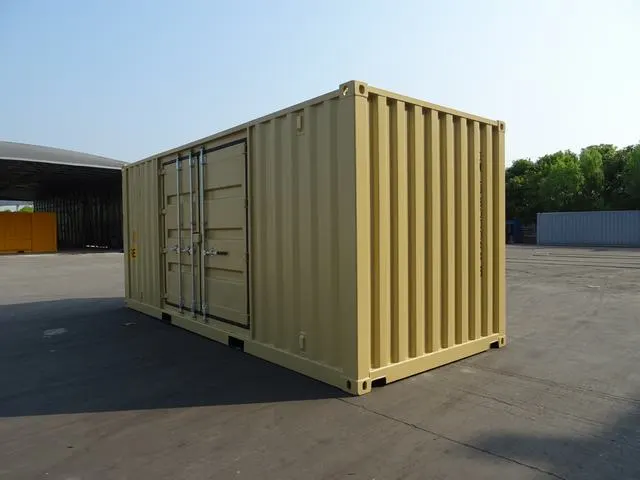 modified
 20ʹ GP + 8ʹ side door
Forklift-width side door on a standard 22G1 shell. Wider cutout, heavier reinforcement and hardware.
See type →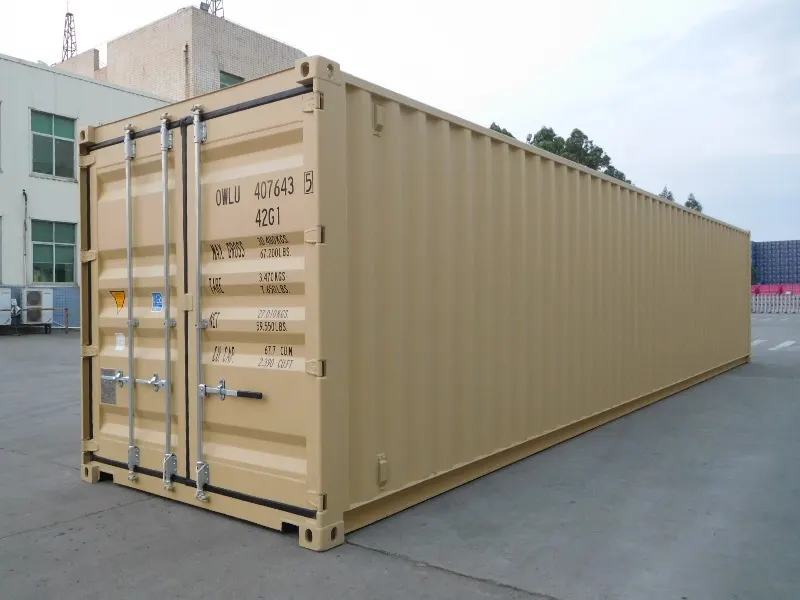 standard
 40ʹ GP
Standard 8ʹ6″ external height in a 40-foot length. Less common than HC, in active rotation for clearance-restricted routes.
See type →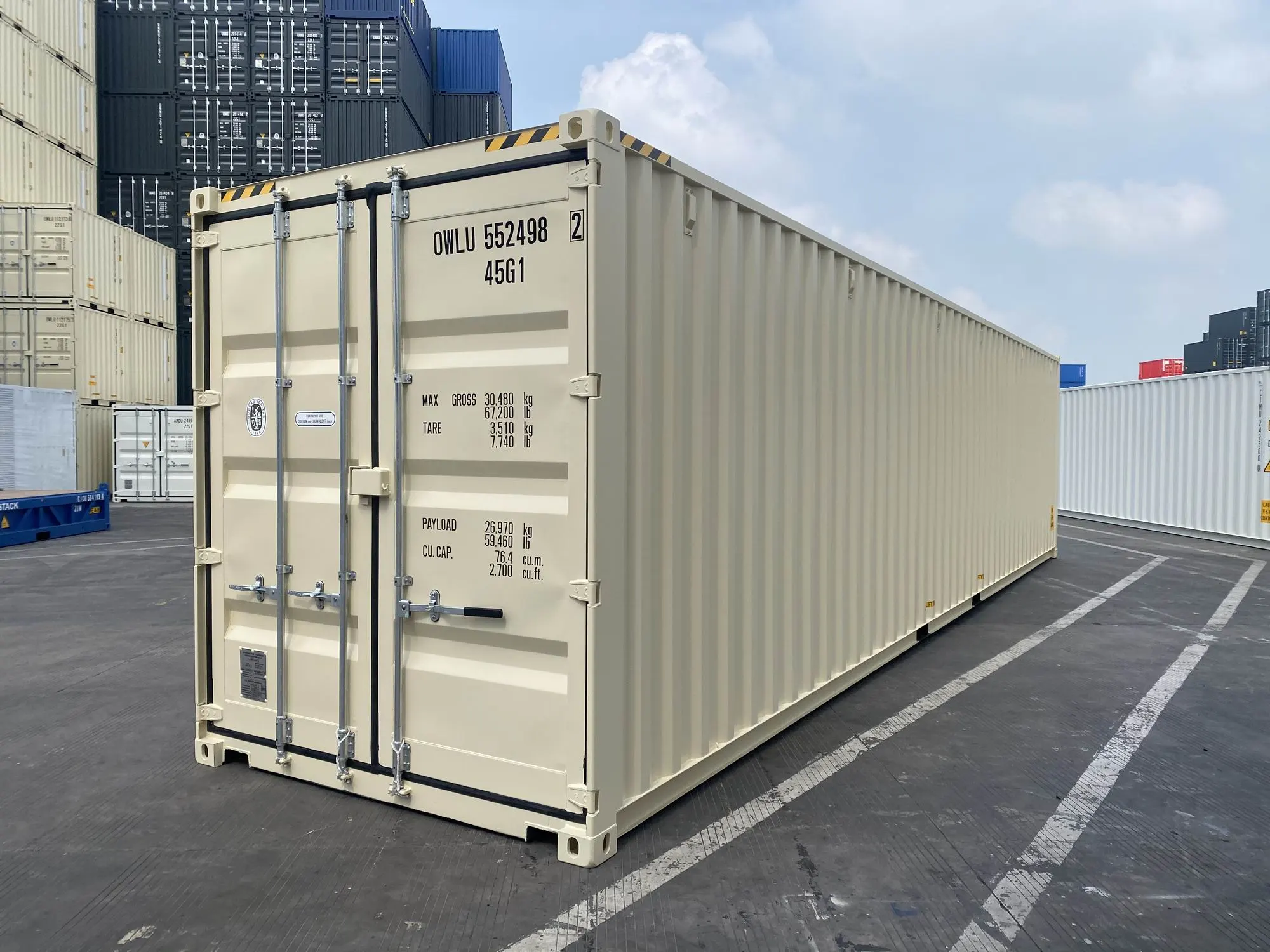 standard
 40ʹ HC
The wholesale standard for new factory production. ISO type 45G1 — 9ʹ6″ external height, 76.3 m³ cubic.
See type →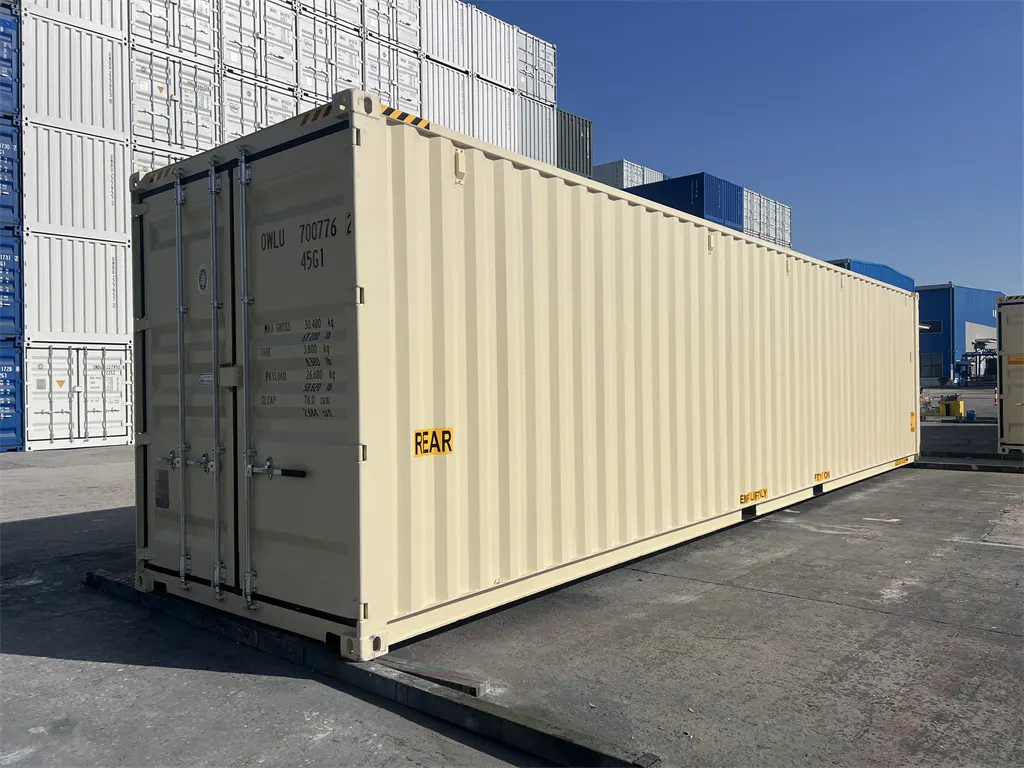 specialty
 40ʹ HC DD
40-foot HC with cargo doors at both ends — ISO type 45G3. Drive-through access in the longer wholesale length.
See type →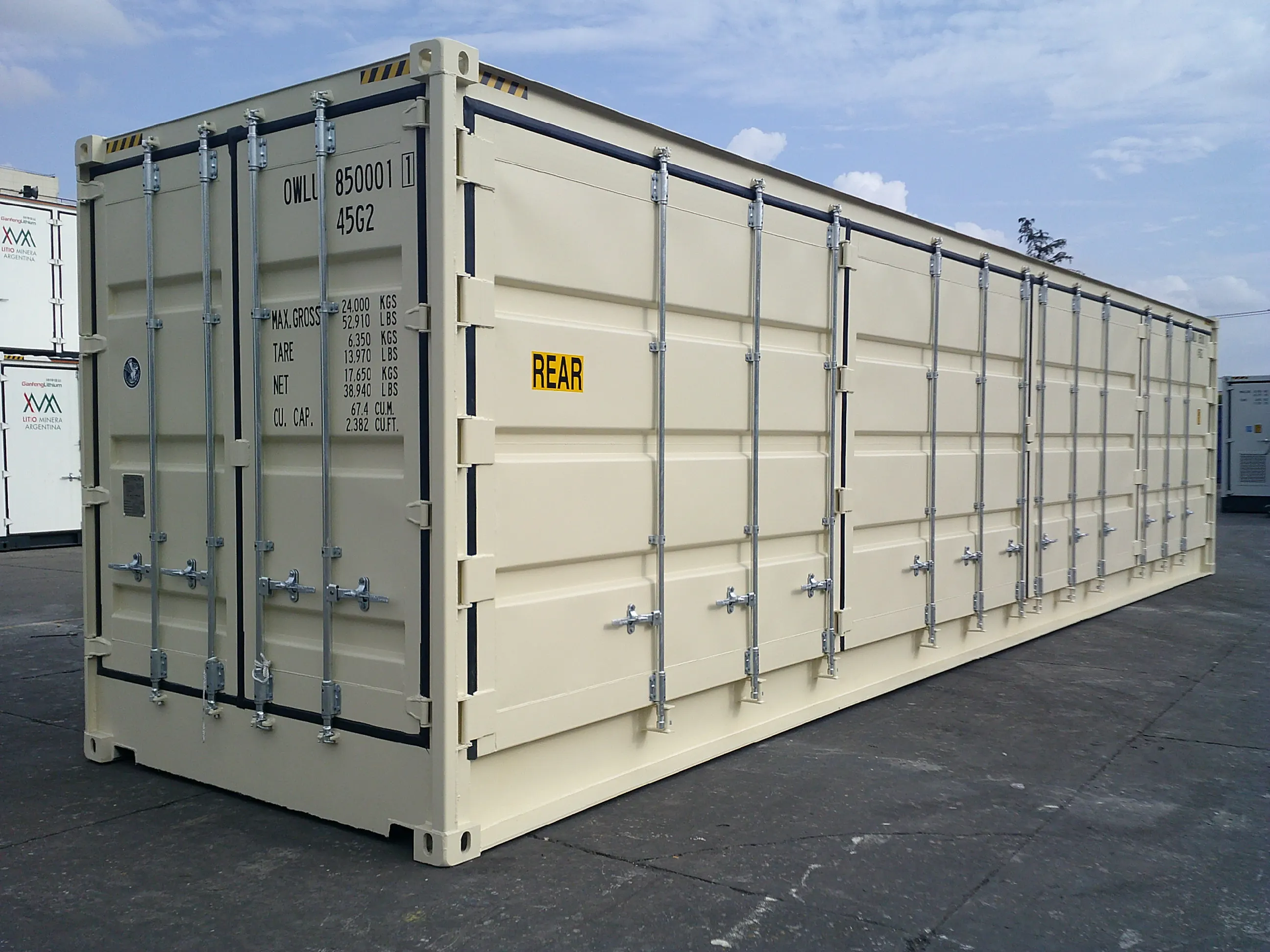 specialty
 40ʹ OS HC
Full-length side access on a 40-foot HC — ISO type 45S1. Eight panels of side door across 40 feet.
See type →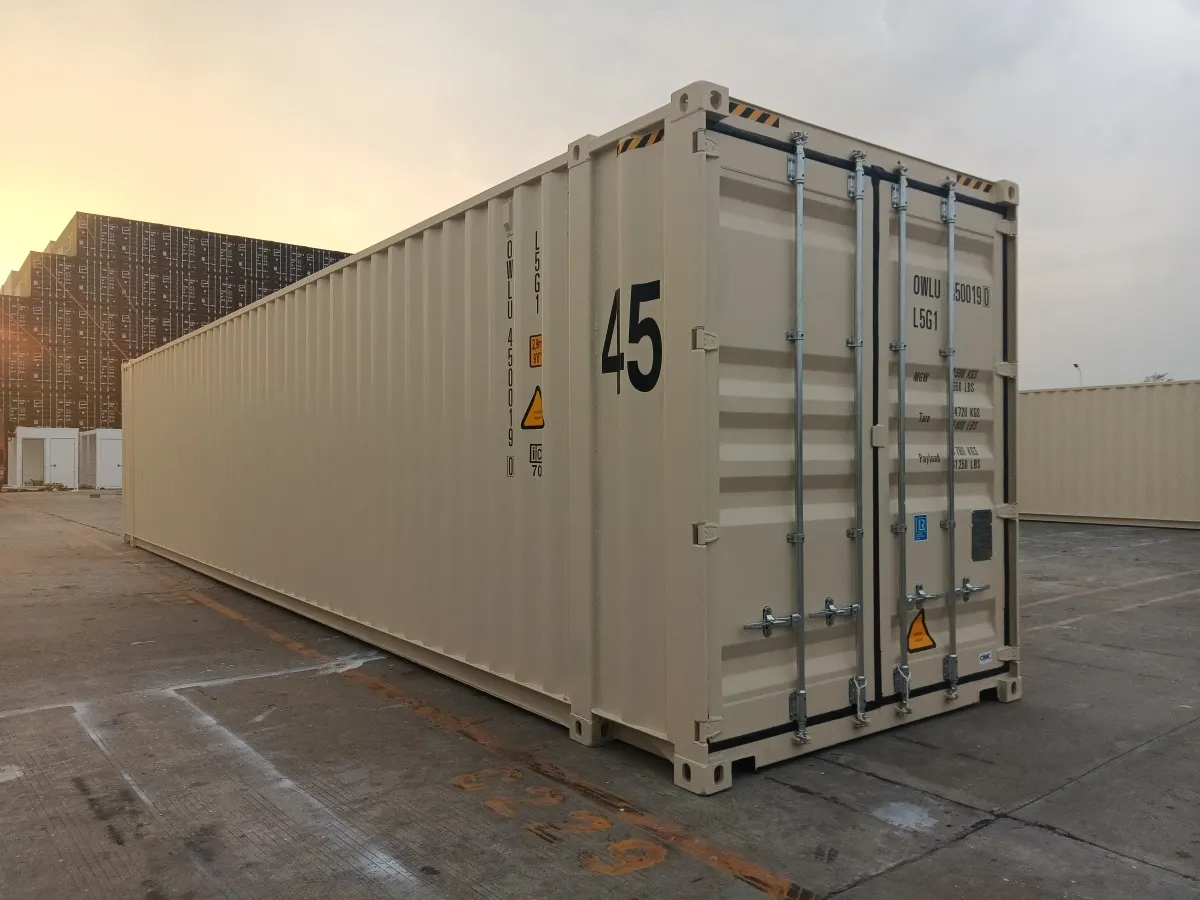
The buying process
- 01Browse the live matrix
Filter by depot city, container type, condition grade, color, and size. What you see is what we hold today — not yesterday.
- 02Add units to your cart
Adjust quantity. Add notes on color or grade flexibility, special handling, or the trucker who’ll pick up.
- 03Quote within one business day
Sales confirms current pricing, specific container numbers, and pickup terms. We don’t publish prices because they move with the market — but we move fast on the quote.
- 04Release once paid
Wire confirms, release goes to the depot, your trucker picks up. Container numbers, ISO 6346 plate, CSC plate, release docs — all travel with the unit.
Used — 3TRP through As-Is, wholesale.
Everything that has carried more than one load, priced by grade rather than by age. Used stock reaches us three ways: pulls already sitting on our yards, off-hire fleets we buy when shipping lines retire equipment, and a wholesale broker network when a spec or volume isn’t on the ground. Every unit is inspected before release, whatever its origin.
The grades, with real criteria
The lessor industry’s reference grade for off-hire surveys. Structurally sound, cosmetically clean, repaired to documented IICL-5 limits. Minor surface marks acceptable; through-rust, fractures, or unrepaired prior damage are not. Doors operate freely; gaskets seal; CSC plate current.
Cargo-rated for international shipping under looser cosmetic tolerances than IICL-5. Dents, paint wear, surface rust acceptable provided structural integrity is intact; doors operate; sealing surfaces sound; CSC plate current or re-certifiable. The wholesale operator workhorse.
Shell sound and dry inside under standard conditions. Cosmetic wear above CW limits acceptable; structural defects above CW limits acceptable provided they don’t compromise the weather seal. Doors must close and seal but may show wear. Not certified for international cargo shipping.
Value tier with defects disclosed up front. Condition varies widely — some near-WWT, others heavily distressed. Buyer accepts the unit as found, which means the inspection criteria need to be specified in writing before release to avoid surprises at delivery.
Full criteria, marking standards, and re-certification notes in the condition grades guide.
Which grade for which use case
| Use case | IICL | CW | WWT | AS-IS |
|---|---|---|---|---|
| Retail resale | best | ok | — | — |
| Operator lease fleet | ok | best | ok | — |
| Storage rental yard | — | best | best | ok |
| High-end builds (offices, residential) | best | ok | — | — |
| Utility modification (project, shop) | — | ok | best | best |
| International export (CSC-certified) | ok | required | — | — |
| Project on-site storage | — | ok | best | ok |
| Static long-term storage | — | ok | best | ok |
What we verify before release
Every used unit is inspected against the contracted grade at the depot before release. The checklist isn’t marketing — it’s the working punchlist:
- Container number against BIC registry — owner code valid, prefix verified, serial and check digit legible.
- CSC plate — current and within the 5-year exam cycle, or re-certifiable (PES / ACEP). Flagged on the release if expired.
- ISO 6346 markings — owner prefix, serial, check digit, type code, weight panel all present and legible.
- Door operation — both doors open and close freely, locking rods engage cleanly, gasket seal continuous.
- Structural — corner castings, top and bottom side rails, end frames, cross-members. No fractures, no weld splits above tolerance.
- Floor — plywood intact, no through-rot, no delamination at cross-member contact points.
- Shell & roof — no through-rust, no pushed-in panels above grade tolerance, no roof punctures or standing-water dents.
- Prior markings — legacy fleet stencils, decals, and brand marks noted. Grinding and repaint priced separately if specified.
What used-buyers get wrong
Used containers usually retain prior owner stencils — MSCU, HLBU, ZIMU, etc. For storage and modification this is fine; for resale or branded fleets it’s not. Grinding the old stencils and respraying is its own cost line. Quote it at order time, not after delivery.
Domestic storage doesn’t care about CSC currency; export does. A WWT or AS-IS unit with an expired plate cannot move international cargo until it’s re-certified (PES or ACEP). Re-certification adds cost and lead time — budget it in if the unit is going overseas.
Two CW units from the same depot pull can look meaningfully different. If the build depends on uniformity — matched paint, similar floor condition, consistent door wear — spec it explicitly at order. “CW with these specific cosmetic notes” is a different deal than “25 CW units, any condition within band.”
When ownership transfers to you, the container must be re-marked with your BIC owner prefix (or kept under OWLU® if you don’t hold a prefix). We re-mark under OWLU® at no extra cost; re-marking under your-prefix is a depot service quoted at order time.
Pulled-paint used units commonly show surface rust at panel seams. Surface rust is cosmetic and doesn’t affect structural grade. Through-rust — rust that has penetrated the corten steel — is structural and disqualifying for CW. Inspection notes should distinguish; ask if they don’t.
Used container prices aren’t fixed. When ocean freight spikes, off-hire inventory dries up and used prices rise. When freight collapses, off-hire floods the market and used prices fall. Geographic spread matters too: coastal depot stock trades below inland markets. We quote same business day — we don’t publish prices because they don’t stay still.
Need it built to spec at the factory?
Factory production is its own engagement — different timeline (weeks, not days), different pricing model (wholesale + MOQ), different paperwork (production schedule, surveyor, container-number block). We run it as a dedicated program with its own page.
Most deals close in one conversation.
Sales covers four U.S. time zones, Mon–Fri. We’d rather work through your questions in one pass than trade emails for a week. Email works the same way — same inbox, same response time — just slower.
Or email sales@onewaylease.com — we answer same business day.
A BIC-registered container owner since 1994.
We hold three BIC owner prefixes — OWLU®, ANYU, and LSEU — each verifiable in the Bureau International des Containers public registry as One Way Lease, Inc. Units from our own fleet carry one of the three; sourced units keep the prefix they arrive with.
- BIC prefixes
- OWLU® · ANYU · LSEU
- NPSA member
- Since 2005
- Depots
- 16 U.S. depots
- Founded
- 1994
Build a cart from live depot stock.