Container doors open by hand when the box sits level, the gear is greased and the gaskets are sound.
A standard container has two doors, four locking rods and eight cams. It is built to stand on its four corner castings: set it out of level and the frame twists, and the doors bind. The right-hand door opens first and closes last.
Judge and use a container’s doors only when it stands level on its four corner castings; out of level, the frame twists and the doors bind. Open the right-hand door first and close it last. Grease the hinges, rod guides, cams and keepers, keep petroleum products off the rubber gaskets, and never force a stuck door with a bar or a forklift.
Door problems, likely causes and first fixes
| Problem | Likely cause | First fix |
|---|---|---|
| Doors bind, spring back or will not close square | The container is out of level and the frame has twisted | Shim the low corner until the door edges meet evenly |
| Doors worked at delivery but bind months later | The supports have settled, or a heavy load sits on one side | Find the low corner and shim it again |
| Cams will not turn into their keepers | A twisted frame, a bent locking rod, or a dented header or sill | Level the container first; a bent rod or a dented header or sill needs repair |
| Handles turn stiffly or not at all | Dry or corroded hinges and rod guides | Free them with penetrating oil, then grease |
| A door drags or sags | Worn or misaligned hinge pins | Grease the hinges; a worn pin or cracked hinge needs repair |
| Daylight along a door edge | A damaged gasket, or a door out of line | Level the container; replace the damaged gasket |
| Doors frozen shut | Ice between the doors or on the gaskets | Thaw with gentle heat or warm water; never pry |
What should you check on a used container’s doors?
Check the doors with the container standing level; on uneven ground a sound door can bind. The full walk-around is in the used-container inspection guide. At the doors, look at six things:
- Locking rods. Two per door, straight, each held in its brackets. Every cam should turn into both its top and its bottom keeper.
- Handles and retainers. Each handle should drop fully into its retainer, and the catch should close. The retainers should be welded or fixed with bolts that cannot be undone from outside; plain nuts and bolts let a door be opened without cutting the padlock.
- Hinges. No cracks, no broken welds at the pins, and the pins in line. Fresh paint on a hinge can hide a crack. Each door should swing through 270°, back against the side wall, without dragging.
- Gaskets. Pliable, fixed along their full length and free of paint. The right-hand door carries a four-sided gasket and the left a three-sided one. The steel they seal against should be free of heavy rust and scale.
- Alignment. Closed, the door edges should meet evenly from top to bottom, with no step between the door bottoms.
- Light. From inside, with the doors shut, there should be no daylight. Have a second person close and open the doors: a standard container has no door handles on the inside.
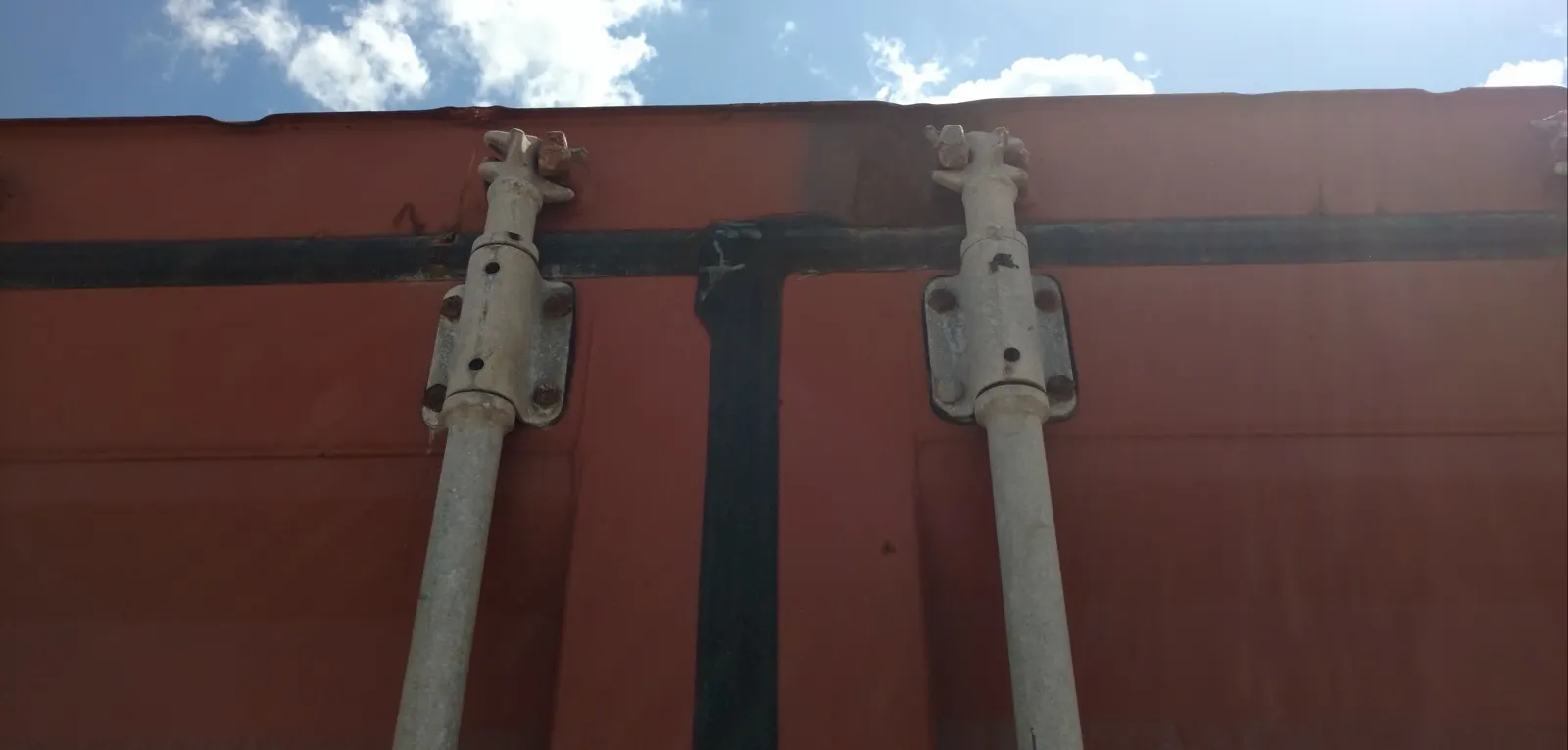
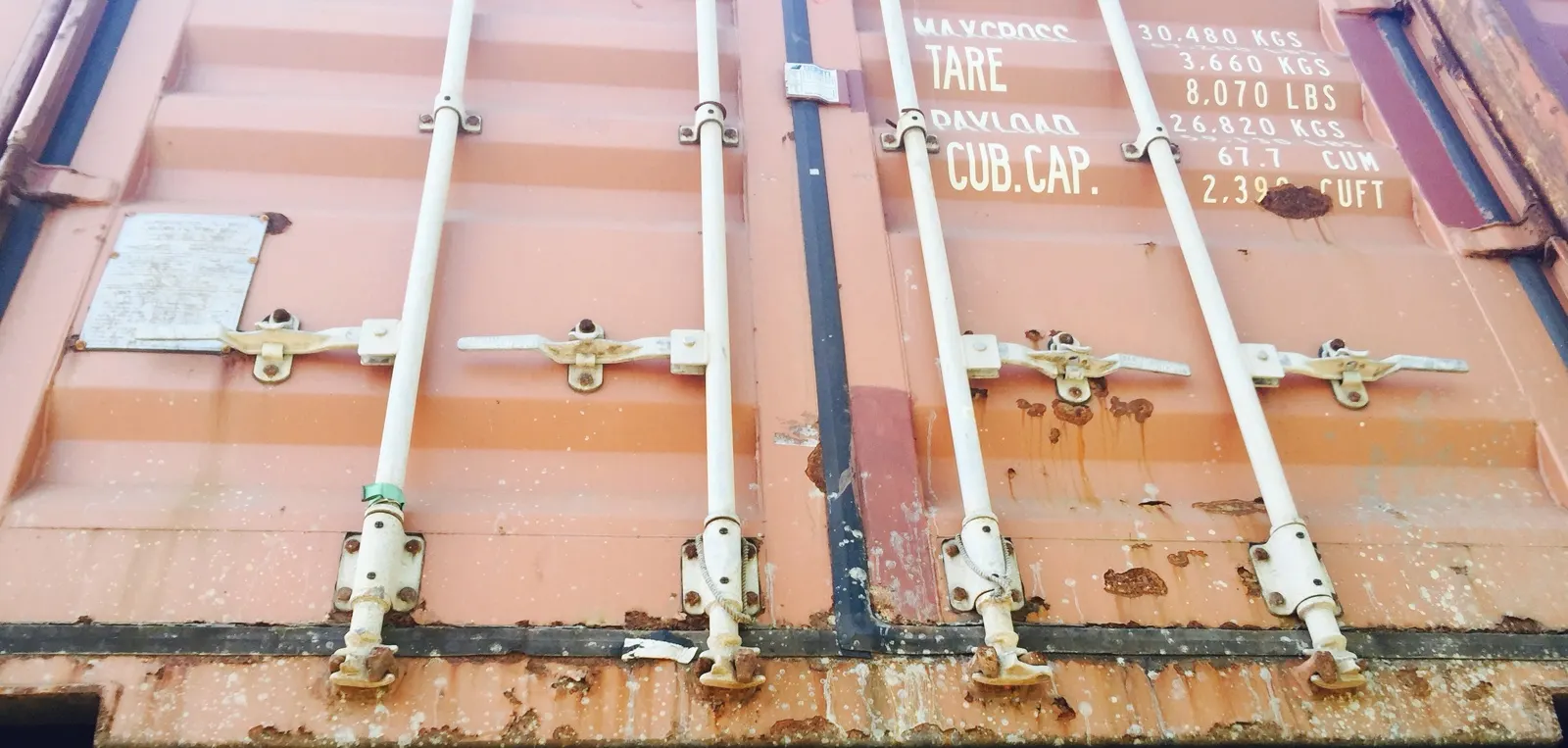
Worn gaskets and faded paint are normal wear on a used container, and its doors take more effort than a new one’s. What counts is that both doors close square, latch by hand without extreme force and keep out light. One Way Lease checks door operation on every used container before release.
How do you set a container level for delivery?
A container is built to stand on its four corner castings. Set on uneven or soft ground, it twists to fit the ground: the door frame goes out of square, and the doors become hard to open and harder to close.
- Ground. Firm, level and drained: pavement, compacted gravel, or solid concrete pads or railroad ties under the four corners. Keep the base off bare soil and grass, out of standing water, and high enough for air to move underneath. On asphalt, which softens in summer heat, set pads or timbers under the corners.
- Supports. The four corner castings carry the load; put the supports under them. A container modified with large side openings may need support along its bottom rails as well.
- Staging. Have the first support in place before the truck backs in, and the rest ready to slide under as the container comes off. Timbers laid along the drop path get pushed aside.
- Level. Check with a long level on the door sill and across the floor, in both directions. Door edges that meet evenly are the practical test.
- Room for the truck. A tilt-bed needs a straight, clear run of about three times the container’s length: roughly 60 feet for a 20ʹ and 120 feet for a 40ʹ, on firm ground, with room overhead for the container as it tilts. Decide which way the doors should face before the container is loaded; the end nearest the cab comes off last.
- Room for the doors. Leave space at the door end for both doors to swing fully open, back against the side walls.
- A test before the driver leaves. Open and close both doors. If they bind, have the driver lift the low corner while you shim it.
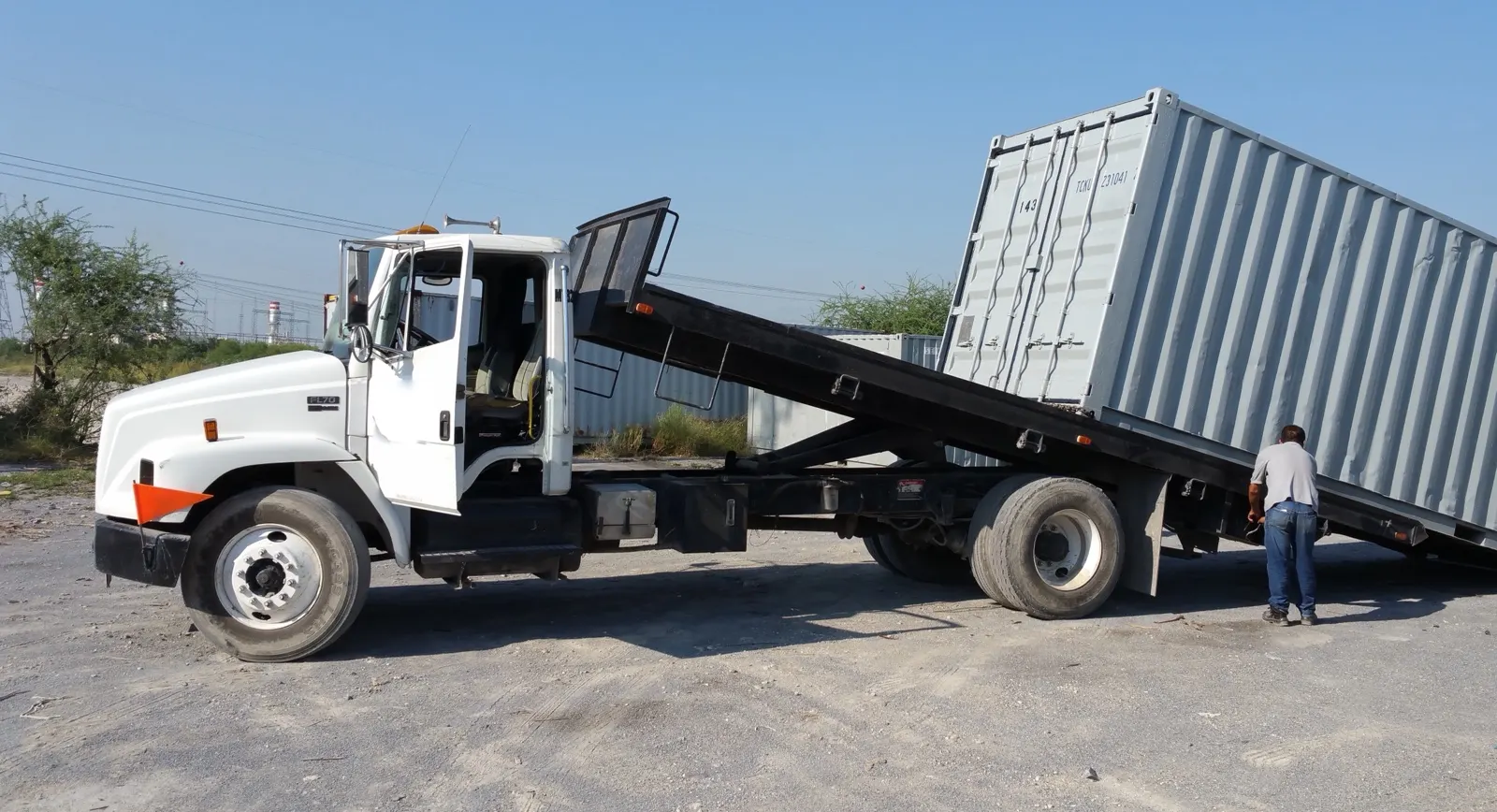
Fixing a low corner
Doors that worked at delivery can start to bind later. A heavy load on one side, supports settling, or a season of rain or frost moves a corner. To find it, watch each cam as the door closes: a cam that meets its keeper low marks the low side. A step between the door bottoms or uneven gaps tell the same story. The low corner is not always at the door end, so check that all four corners bear on their supports.
Lift the low corner at its corner casting with a bottle jack set on a solid base, a little at a time. Slide in a solid shim, such as hardwood, plywood or steel plate, lower the container and test the doors; repeat until they close square. Block as you lift, and keep hands and feet out from under the container.
How do you open and close container doors?
- Open the right-hand door first, as you face the doors. It overlaps the left-hand door.
- Lift both of its handles out of their retainers and turn them together through about 90°. The cams press against the keepers and lever the door open.
- Grip the rods at about shoulder height and pull back with your legs, not your back.
- Open the left-hand door the same way. For quick access, the right-hand door can be opened on its own.
- Swing each door all the way back against the side wall and hook it to its holder. An open door left free can be blown shut by the wind.
- To close, swing the left-hand door shut first, then the right so it laps over the left. Before turning a door’s handles, check that its cams are square to their keepers, top and bottom. Turn the handles back until each drops into its retainer, and close the catches.

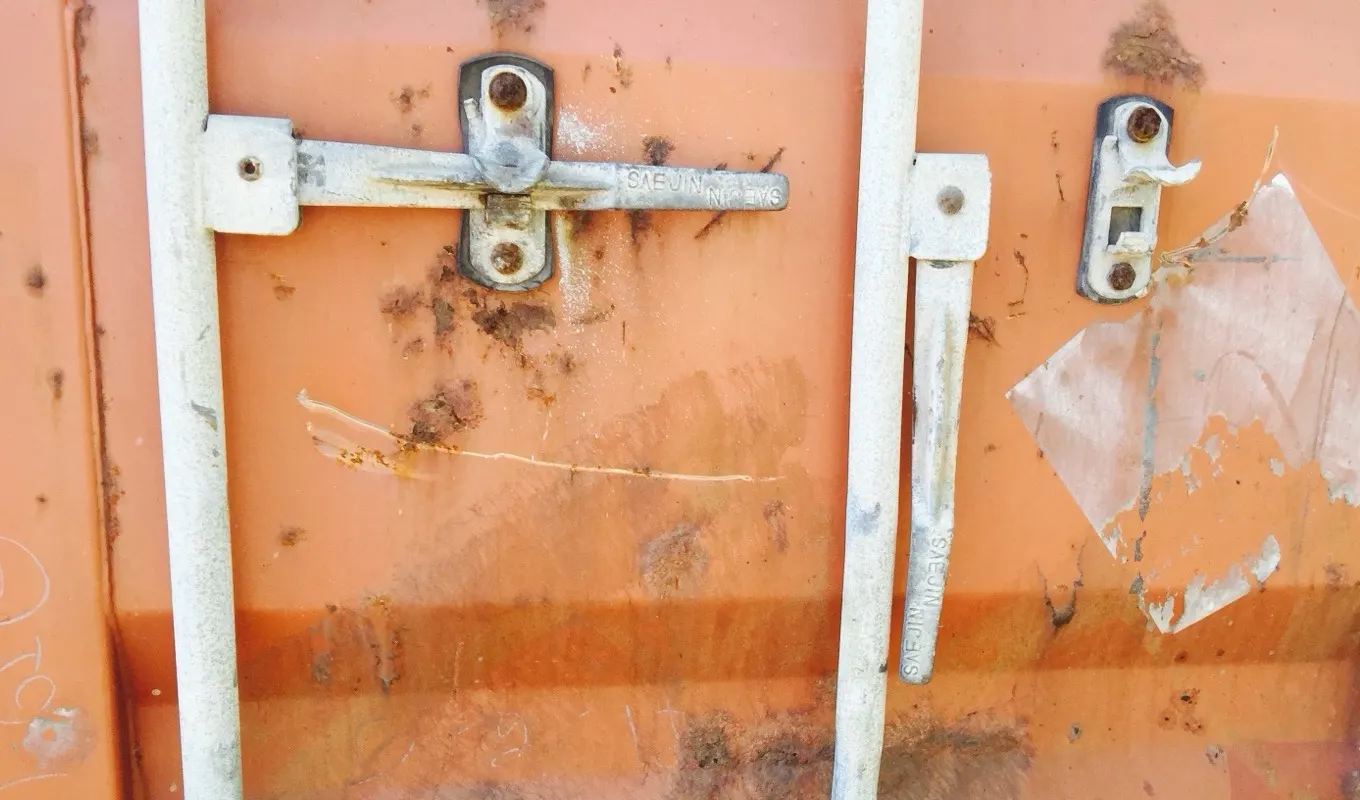
If a door will not move, check that the container is level and the cams are clear of their keepers, then get a second person. Never force a door with a bar or a forklift: it bends the rods and hinges, and it is how people get hurt. Do not kick a door shut either; it peels the bottom gasket away and lets water in at the door bottom, where rust starts.
Before opening a container someone else has loaded, tap the doors. A dull sound means cargo may be resting against them. Fit a chain or strap across the doors that lets them open no more than about 6 inches, open the right-hand door against it, and stand toward the hinge side.
How do you lubricate and maintain container doors?
- What to grease. The hinge pins, through their grease fittings where they have them; the rod guides; the cams and keepers; and the handle hubs. Wipe each point clean first, because grease mixed with grit wears the parts. Open and close the doors a few times to work it in, then wipe off the excess.
- What to use. A water-resistant grease on the metal joints. Penetrating oil frees a seized part but does not last; follow it with grease.
- Gaskets. Clean them with soap and water. If you treat them, use a silicone product, applied sparingly with a cloth. Keep petroleum-based oils and greases off the rubber, and never paint it.
- How often. No standard sets an interval. A practical rule for a fleet is each time a container comes back from a customer, and more often near salt water, on salted roads, in sand and through hard winters.
- Rust at the door bottoms. Wire-brush loose rust, prime and repaint, and keep mud and standing water away from the door end. Paint before treating gaskets with silicone, because paint does not stick over silicone.
- Cold weather. Treat the gaskets with silicone before winter so they do not freeze to the frame. Thaw a frozen door with gentle heat or warm water, never boiling water, and never force it.
Hinges left without grease corrode, jam and can crack. In one published case, three hinges failed in turn and a door fell off.
When do door parts need repair or replacement?
- Gaskets. Replace a gasket that is torn, missing, loose, painted stiff or not light-tight. Replace the whole gasket when its molded corners are damaged. New gaskets are riveted on with stainless strips, the right-hand door’s four-sided gasket first.
- Locking rods. A bent rod is straightened or replaced, and a broken guide is replaced.
- Hinges. Cracked hinges and worn pins are replaced. Every pin on a door has to stay in line, or the door binds.
- Header and sill. A dent that stops a door closing, or a cam reaching its keeper, is a repair.
- Shortcuts to avoid. Do not cut off rods or cams, grind the keepers or heat the hinges with a torch to make a door easier. These hide a leveling problem, weaken the door’s security, and leave a container that needs repair before it can carry cargo.
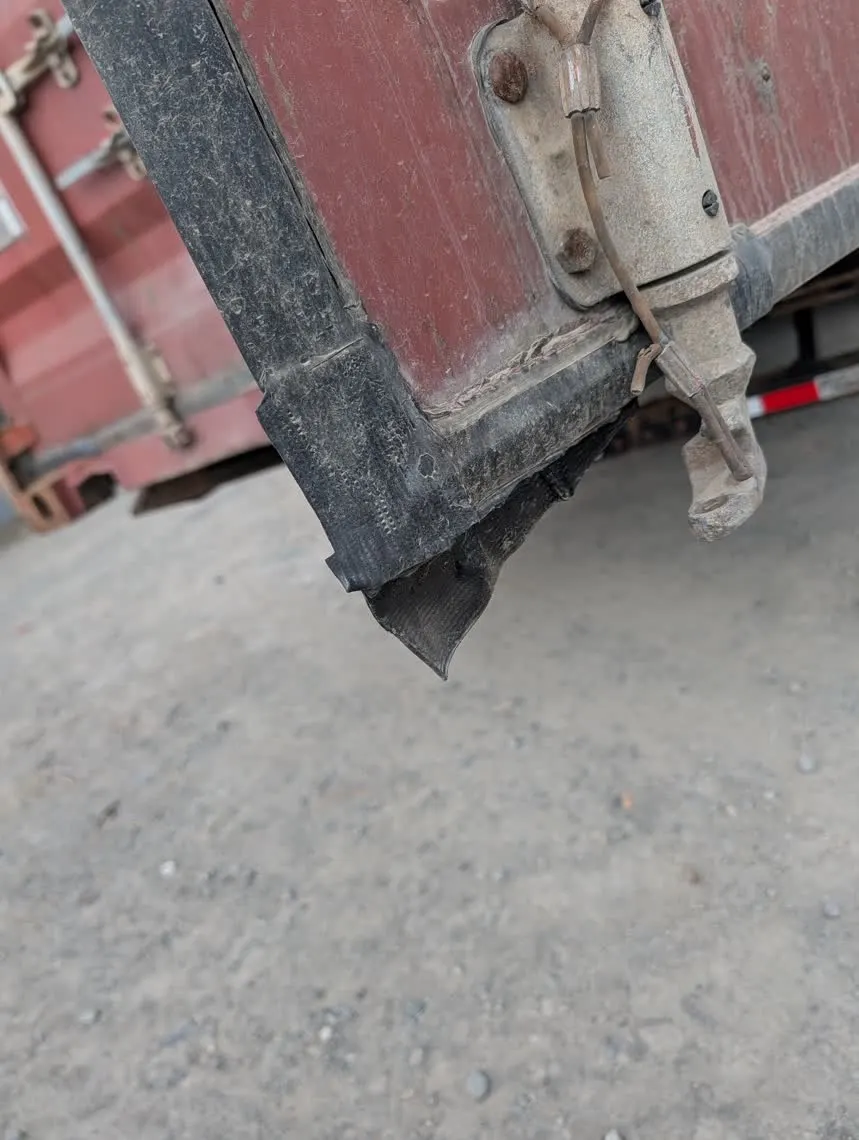
On a used container you are buying, agree in writing whether any door fault will be repaired before release.
Shipping container doors FAQ
Why are shipping container doors hard to open or close?
Check the ground first. A container standing out of level twists, its door frame goes out of square and the doors bind, closing harder than they open. Doors that worked at delivery and bind now point to a corner that has settled or a heavy load on one side; find the low corner and shim it. If the container is level, look for dry or corroded hinges and rod guides, a bent locking rod, or a dented header or sill.
Which shipping container door opens first?
The right-hand door, as you face the doors. It overlaps the left-hand door and carries the four-sided gasket. When closing, shut the left-hand door first, then the right.
What should you grease on container doors, and with what?
Grease the hinge pins, rod guides, cams and keepers, and handle hubs with a water-resistant grease, after wiping each point clean. Penetrating oil frees a seized part but does not last. Keep petroleum products off the rubber gaskets; clean them with soap and water and, if you treat them, use silicone.
How do you level a shipping container?
Set it on firm, drained ground with supports under the four corner castings, such as concrete pads or railroad ties. Check with a long level on the door sill and across the floor, shim the low corner, then open and close both doors before the driver leaves.
Can shipping container door seals be replaced?
Yes. The gaskets are riveted to the doors with stainless strips. The right-hand door takes a four-sided gasket and the left a three-sided one. Replace the whole gasket when its molded corners are damaged, then check for daylight with the doors shut.
How do you stop container doors freezing shut?
Treat the gaskets with silicone before winter so they do not freeze to the frame, and keep water from pooling at the door end. Thaw a frozen door with gentle heat or warm water, never boiling water, and never pry it.
Last updated